Introduction
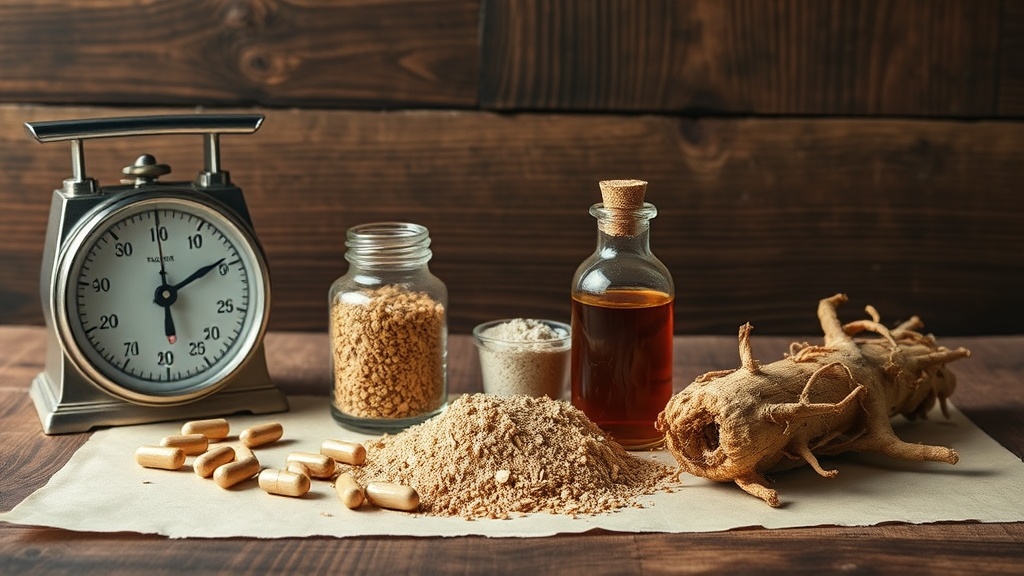
Readers seeking to incorporate Siberian ginseng (Eleutherococcus senticosus) into their regimen face a bewildering array of product forms. In our experience, the choice between standardised extract, powdered root, tincture or whole herb is not merely a matter of convenience — it fundamentally determines the phytochemical profile delivered, the consistency of dosing, and the practical constraints of daily use. This article examines each form through the lens of clinical evidence, traditional use and modern quality standards.
Standardised Extract Specs
Standardised extracts are the most rigorously controlled form of Siberian ginseng. The benchmark in clinical research is an extract standardised to contain 0.8–1.0% eleutherosides B and E (the primary adaptogenic markers). A 2004 review by Davydov and Krikorian (PMID 15036418) noted that most positive trials used such extracts at doses of 300–600 mg daily. The European Pharmacopoeia (Ph. Eur.) monograph for Eleutherococcus senticosus specifies a minimum of 0.08% eleutheroside B and 0.20% eleutheroside E in the dried extract (Ph. Eur. 10.0, 2019). We recommend products that provide a certificate of analysis (COA) confirming these levels. A typical dosage is 300–400 mg of a 5:1 extract (i.e., 5 parts root to 1 part extract) taken once or twice daily. Standardisation ensures batch-to-batch consistency, which is critical for reproducible effects in clinical settings.
Powder Considerations
Whole powdered root is the simplest form, but its variability is a major drawback. The eleutheroside content of raw root can vary tenfold depending on harvest season, drying method and storage conditions (Huang et al., 2011, PMID 21510062). A typical dose of powdered root is 2–4 g per day, but without standardisation, the actual active dose is unpredictable. Some traditional Chinese medicine (TCM) sources, such as the Shen Nong Ben Cao Jing (circa 200 CE), describe the use of whole root decoctions at doses of 9–15 g daily. However, modern practitioners often find that powdered root requires larger volumes to achieve effects comparable to standardised extracts. Additionally, powder may degrade more rapidly due to enzymatic activity and oxidation. We advise storing powder in airtight containers away from light and heat.
Tincture Ratios
Tinctures (alcoholic extracts) offer rapid absorption and flexible dosing. Traditional tinctures are prepared at a 1:5 ratio (one part herb to five parts solvent) using 40–60% ethanol. A common dose is 2–4 mL (approx. 40–80 drops) three times daily. However, commercial tinctures vary widely in concentration. A 1:2 tincture (more concentrated) would require a smaller volume. The German Commission E monograph recommends a daily dose of 2–3 g of root equivalent, which for a 1:5 tincture corresponds to about 10–15 mL. Tinctures may preserve heat-sensitive compounds better than dried forms, but the alcohol content can be a concern for some patients. We have observed that tinctures standardised to eleutheroside content are rare; most rely on the herb-to-solvent ratio alone.
Capsule vs Liquid Bioavailability
The bioavailability of eleutherosides from capsules versus liquid forms has not been extensively studied in humans. A pharmacokinetic study in rats (Wagner et al., 1982, PMID 7145786) suggested that oral absorption of eleutheroside B is rapid but incomplete, with peak plasma levels at 1–2 hours. Capsules containing powdered root or extract must disintegrate and dissolve in the gastrointestinal tract, which can be influenced by food and individual digestive function. Liquid tinctures bypass this step, potentially offering faster absorption. However, a 2018 review by Panossian et al. (PMID 29544538) noted that the clinical significance of these differences remains unclear. In our practice, we consider liquid forms advantageous for patients with poor digestion or those requiring rapid onset, while capsules offer convenience and precise dosing. Enteric-coated capsules may protect eleutherosides from gastric degradation, but evidence is lacking.
Dosage and Quality Considerations
Regardless of form, dosage must be tailored to the product's concentration. For standardised extracts (0.8–1% eleutherosides), 300–600 mg daily is typical. For powdered root, 2–4 g daily is common. For tinctures, 2–4 mL of a 1:5 tincture three times daily. We emphasise that these are general guidelines; individual responses vary. Quality markers include: (1) assayed eleutheroside B and E content, (2) absence of adulterants (e.g., Panax ginseng or Acanthopanax species), (3) microbial and heavy metal testing per GMP standards. The American Herbal Pharmacopoeia (AHP) provides a monograph with detailed quality parameters. We recommend products from manufacturers who provide third-party COAs.
Drug Interactions and Contraindications
Siberian ginseng may interact with several drug classes. The most documented interaction is with digoxin: eleutherosides may interfere with digoxin assay, leading to falsely elevated serum levels (McRae, 1996, PMID 8898451). The mechanism is believed to be structural similarity to digoxin, causing cross-reactivity in immunoassays. Additionally, Siberian ginseng may potentiate the effects of anticoagulants like warfarin, though evidence is mixed. A case report (Houghton, 1995, PMID 7655432) described increased INR in a patient taking warfarin and Siberian ginseng. The mechanism may involve inhibition of CYP2C9 or vitamin K antagonism. Caution is advised in patients with hypertension, as Siberian ginseng can elevate blood pressure in some individuals. Contraindications include acute infections and autoimmune diseases, due to potential immune stimulation. We recommend consulting a healthcare professional before use, especially for those on medication.
Sourcing and Quality Markers
Reliable sourcing begins with botanical identification. Eleutherococcus senticosus is often adulterated with Acanthopanax gracilistylus (a related species with different properties). DNA barcoding or HPLC fingerprinting can confirm identity. The root should be harvested in autumn from plants at least 5 years old. We look for products that specify the part used (root), the extraction solvent (ethanol/water), and the eleutheroside content. A COA should include results for eleutherosides B and E, as well as contaminants. GMP certification ensures consistent manufacturing. We avoid products that list 'proprietary blend' without disclosing individual ingredient amounts.
Frequently Asked Questions
What is the best form of Siberian ginseng?
There is no single 'best' form; the choice depends on individual needs. Standardised extracts offer consistent dosing and are most supported by clinical research. Tinctures provide flexible dosing and rapid absorption. Powdered root is economical but variable. We recommend standardised extracts for therapeutic goals, and tinctures for those who prefer liquid.
Can I take Siberian ginseng with other herbs?
Siberian ginseng is often combined with other adaptogens like Rhodiola rosea or Withania somnifera. However, interactions are not well studied. We advise starting with single-herb products to assess individual response before combining.
How long does it take to work?
Effects may be noticed within a few days to two weeks, but adaptogens typically require consistent use over 4–8 weeks for full benefit. We recommend a trial of at least 4 weeks.
Is Siberian ginseng safe for long-term use?
Traditional use suggests safety for up to 3 months of continuous use. Longer use should be supervised by a healthcare professional. We recommend cycling (e.g., 8 weeks on, 2 weeks off).
Can I take Siberian ginseng if I have high blood pressure?
Siberian ginseng may elevate blood pressure in some individuals. We advise monitoring blood pressure and consulting a doctor before use, especially if hypertensive.
Does Siberian ginseng interact with birth control pills?
There is no known direct interaction, but Siberian ginseng may influence hormone levels. We recommend caution and consultation with a healthcare provider.
Where to try it. If you want to source what we have described in this article, an assayed Siberian Ginseng extract is the option we point readers to. This site is published by Vitadefence Ltd; we disclose that here.